
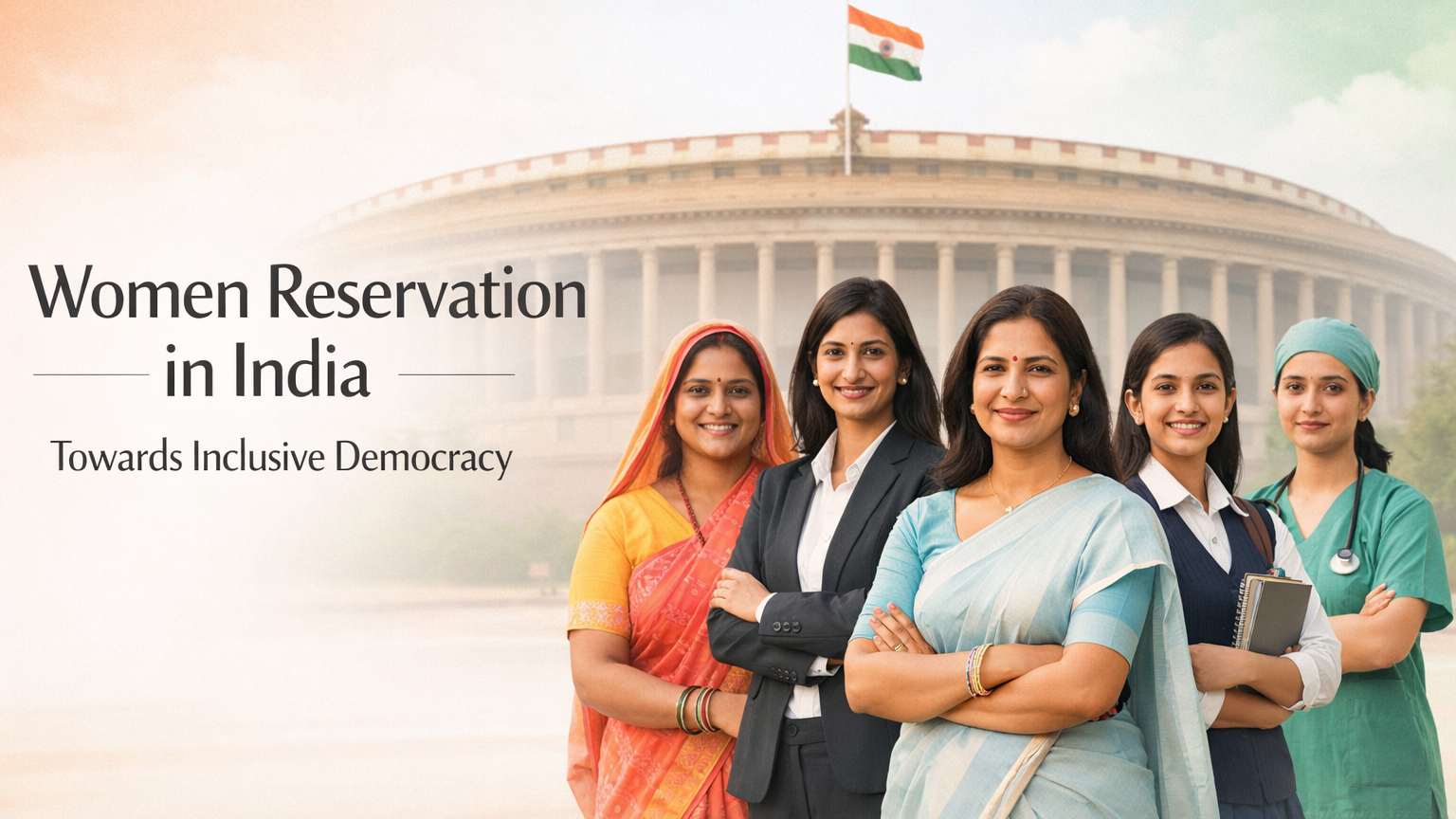
India, as the world’s largest democracy, has made significant strides in political representation and governance. However, the participation of women in legislative bodies has remained disproportionately low compared to their population share. This gap has led to sustained debates on the need for affirmative action in politics. The concept of Women Reservation emerges as a corrective mechanism to ensure equitable participation of women in decision-making processes and to strengthen democratic inclusivity.
Historical Background
The demand for reservation for women in politics is not new. It dates back to the pre-independence era when social reformers advocated for gender equality. After independence, the Indian Constitution guaranteed equality before the law, but societal barriers continued to limit women’s access to politics.
A major breakthrough came with the 73rd and 74th Constitutional Amendments, which provided reservation for women in Panchayati Raj Institutions and Urban Local Bodies. This step demonstrated that when given the opportunity, women can effectively contribute to governance. Building upon this success, the idea of extending Women Reservation to higher legislative bodies gained momentum.
Women Reservation Act, 2023: Key Features
The passage of the Women’s Reservation Act, 2023, officially known as the Nari Shakti Vandan Adhiniyam, marks a historic milestone. It aims to provide one-third reservation for women in the Lok Sabha and State Legislative Assemblies.
Some of its key features include:
- 33% Reservation: One-third of seats in Lok Sabha and State Assemblies are reserved for women.
- Quota within Quota: Reservation is also applicable for women belonging to SC/ST categories.
- Rotation of Seats: Reserved constituencies will rotate after delimitation.
- Time Frame: The provision is initially applicable for 15 years.
- Implementation Clause: The law will be implemented after the next Census and delimitation exercise.
This legislation represents a significant step towards institutionalizing Women Reservation in India’s parliamentary framework.
Need for Women Reservation
1. Underrepresentation in Politics
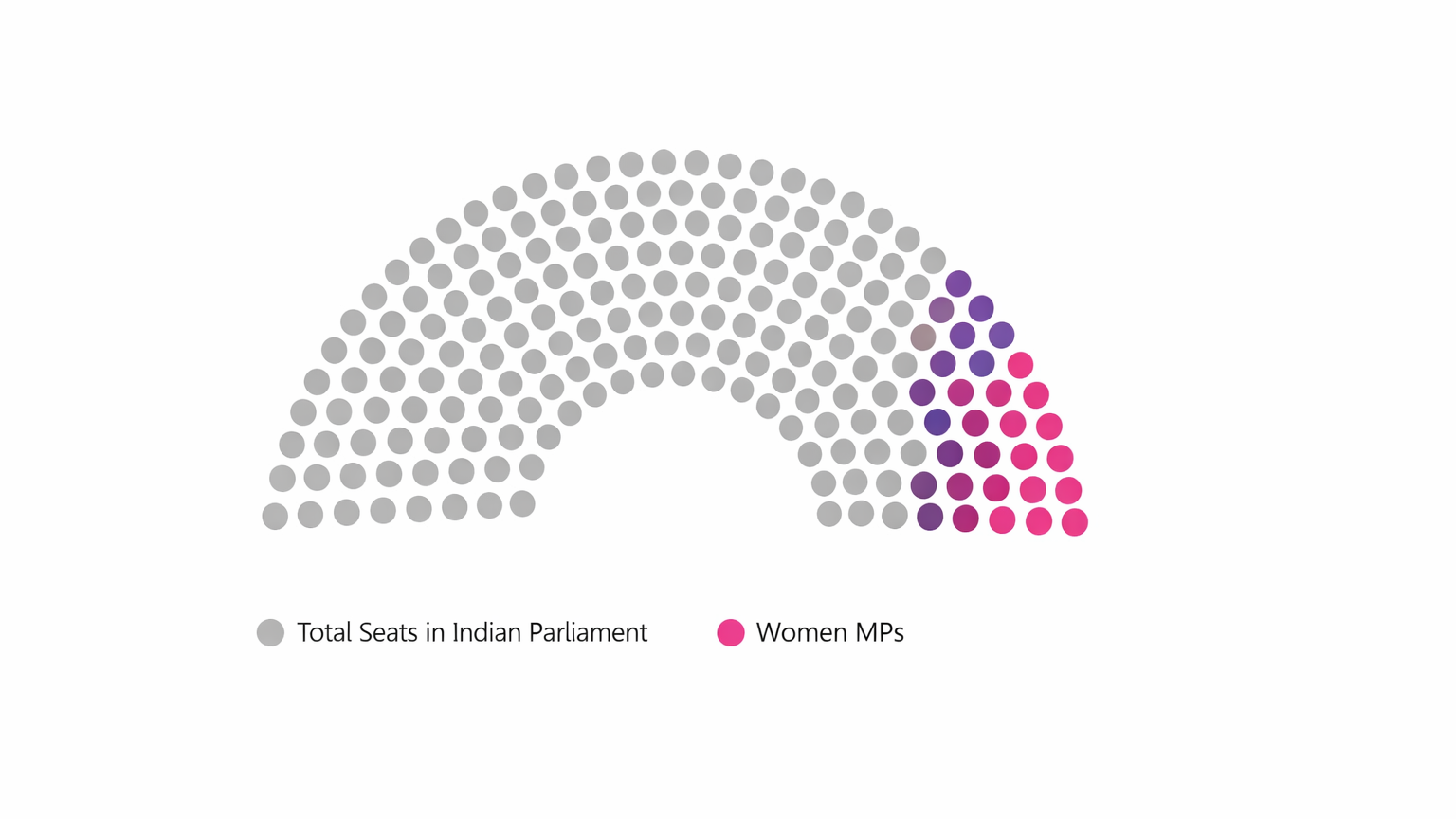
Despite gradual improvements, women’s representation in Parliament remains limited. Structural barriers such as lack of resources, societal norms, and political gatekeeping continue to hinder their participation.
2. Gender Equality and Social Justice
True democracy requires equal participation from all sections of society. Women Reservation serves as an instrument to bridge gender disparities and promote social justice.
3. Inclusive Policymaking
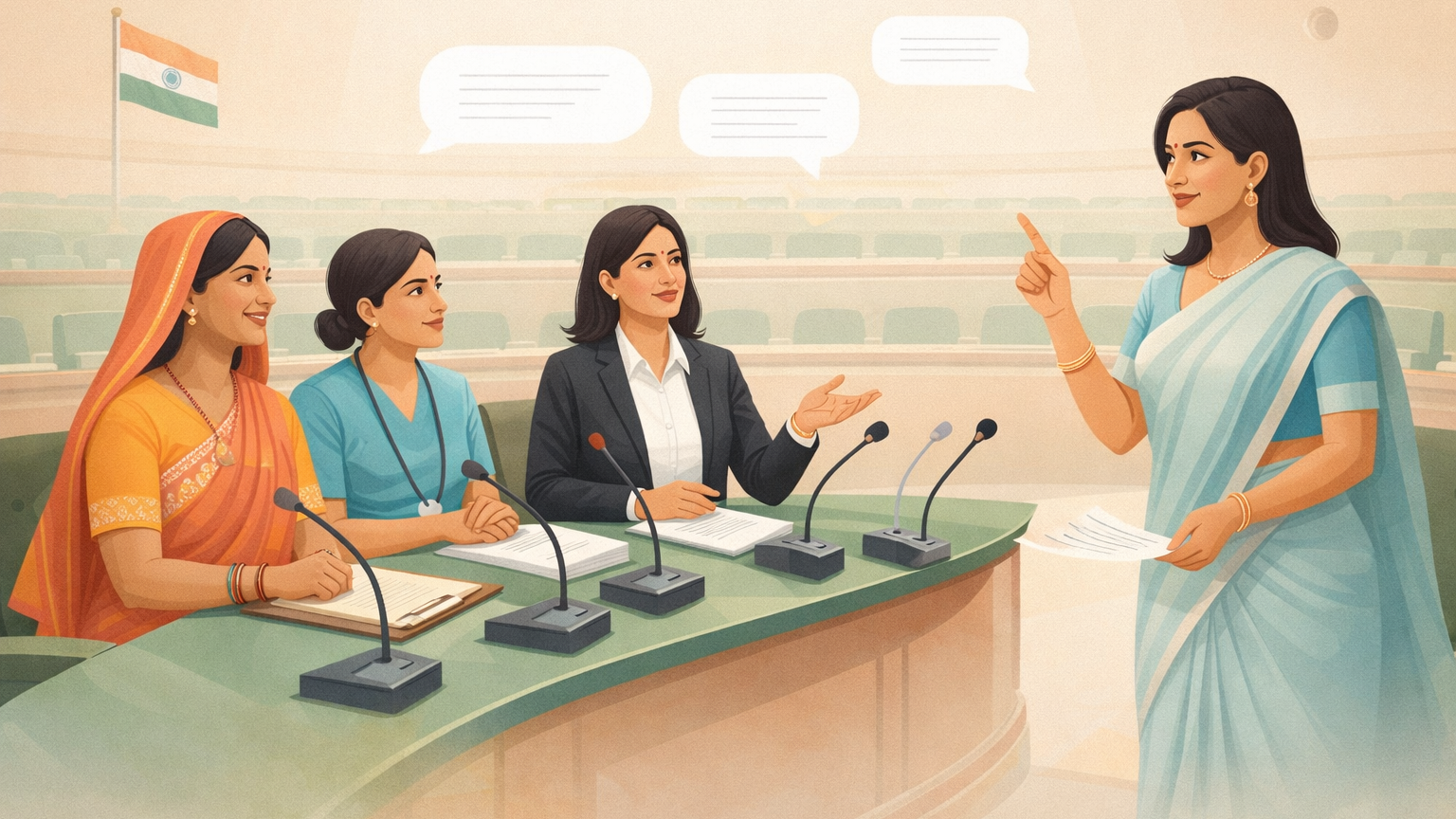
Women leaders often bring attention to issues like health, education, nutrition, and gender-based violence. Their inclusion ensures a more balanced and inclusive policymaking process.
4. Global Commitments
India is a signatory to international conventions promoting gender equality, such as CEDAW. Enhancing women’s political participation aligns with these global commitments.
Arguments in Favour
Empowerment and Representation
Reservation provides women with a platform to participate in governance, thereby empowering them politically and socially. It helps break the traditional barriers that have historically excluded women from politics.
Improved Governance Outcomes
Studies have shown that women leaders often prioritize welfare-oriented policies. Their leadership can lead to better outcomes in sectors such as education, health, and social welfare.
Role Model Effect
Increased visibility of women in politics inspires future generations to participate in public life, creating a virtuous cycle of empowerment.
Success at Grassroots Level
The success of reservation in Panchayati Raj Institutions highlights the effectiveness of affirmative action. Many women leaders at the grassroots level have demonstrated administrative competence and leadership skills.
Arguments Against and Challenges
Delayed Implementation
One of the major criticisms is that the implementation of the Act is contingent upon Census and delimitation. This creates uncertainty regarding its actual enforcement.
Lack of OBC Reservation
The absence of reservation for OBC women has been a point of contention. Critics argue that without addressing intersectionality, the policy may not benefit all sections of women equally.
Proxy Representation
There are concerns about the phenomenon of “proxy representation,” where male family members influence or control women representatives. This can dilute the effectiveness of the policy.
Rotation of Constituencies
Frequent rotation of reserved seats may affect continuity and accountability in governance, as representatives may not get sufficient time to establish their work.
Way Forward
Timely Implementation
The government must ensure that the Census and delimitation processes are conducted without delay so that the benefits of reservation can be realized at the earliest.
Capacity Building
Training and leadership programs should be introduced to equip women representatives with the necessary skills for effective governance.
Political Party Reforms
Political parties should voluntarily increase the number of tickets given to women candidates, complementing legislative efforts.
Addressing Intersectionality
There is a need to consider reservation for OBC women to make the policy more inclusive and equitable.
Conclusion
The introduction of Women Reservation in legislative bodies is a transformative reform that has the potential to redefine India’s democratic structure. While challenges such as delayed implementation and concerns over inclusivity remain, the policy represents a crucial step toward gender equality in politics.
A truly representative democracy must reflect the diversity of its population. By ensuring greater participation of women, India can move closer to achieving the ideals of justice, equality, and inclusive governance enshrined in its Constitution. The success of Women Reservation will ultimately depend on effective implementation, institutional support, and a broader societal shift towards gender equality.
Join Kesari IAS Mentorship for Complete UPSC Preparation
UPSC preparation sirf knowledge ka game nahi hai—it requires the right strategy, guidance, and consistent evaluation. At Kesari IAS, our mentorship program is designed to provide aspirants with personalized guidance, answer writing practice, and a structured roadmap to crack the Civil Services Examination.
Whether you are preparing for Prelims, Mains, or Interview, Kesari IAS mentorship ensures that you stay focused, motivated, and on the right track throughout your journey.
👉 Start your UPSC journey with the right guidance today.
👉 Join Kesari IAS Mentorship and move one step closer to your IAS dream.